

UTC Poland
Engineering Excellence Under Pressure
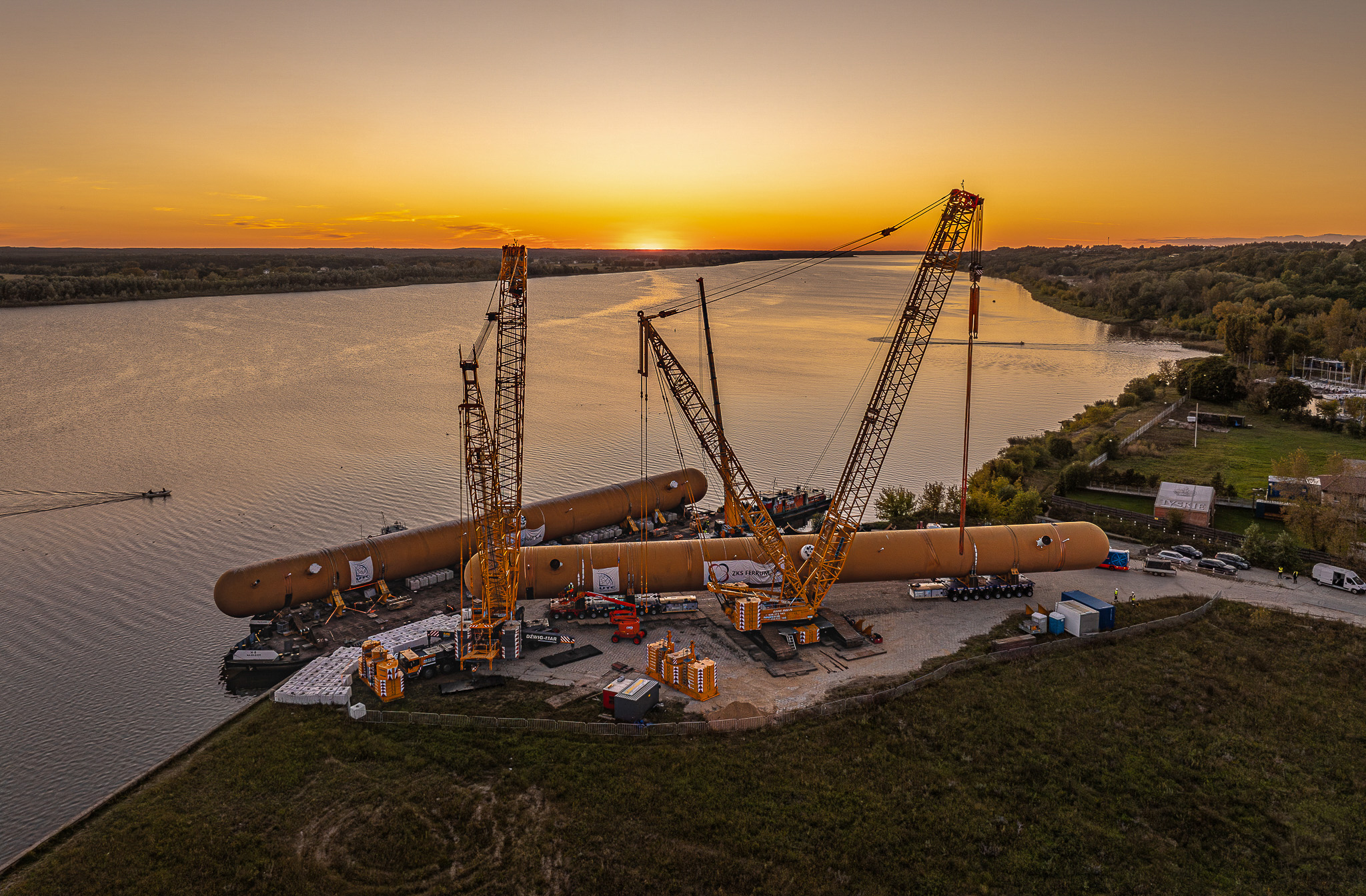
What began as a bold, high-stakes engineering mission to transport massive tanks along the Vistula developed into an eight-month project conducted during the river’s driest period in history. Tasked with moving enormous LPG storage tanks via barges, UTC’s Poland team faced a complex logistical undertaking that posed massive engineering challenges at every step.
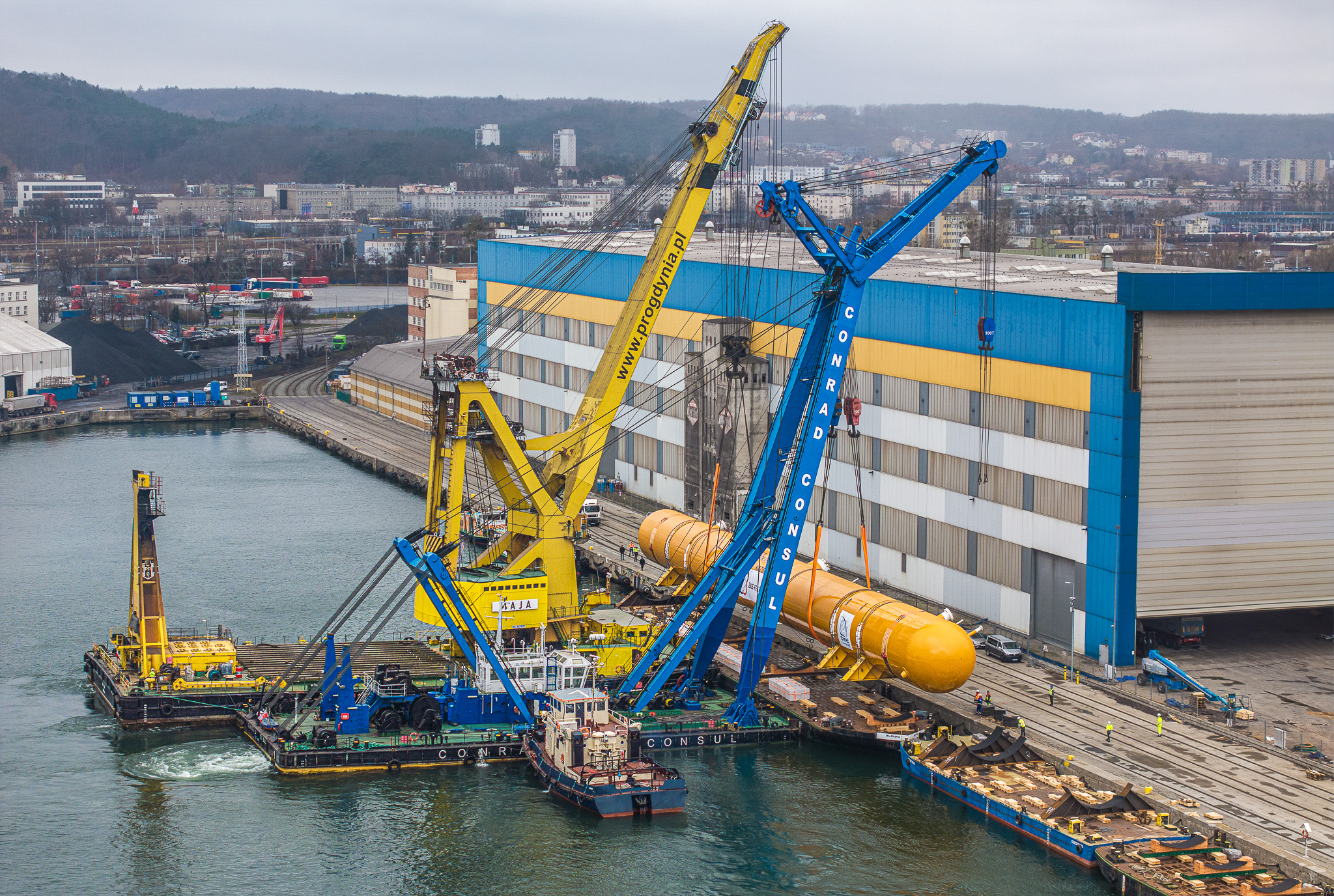
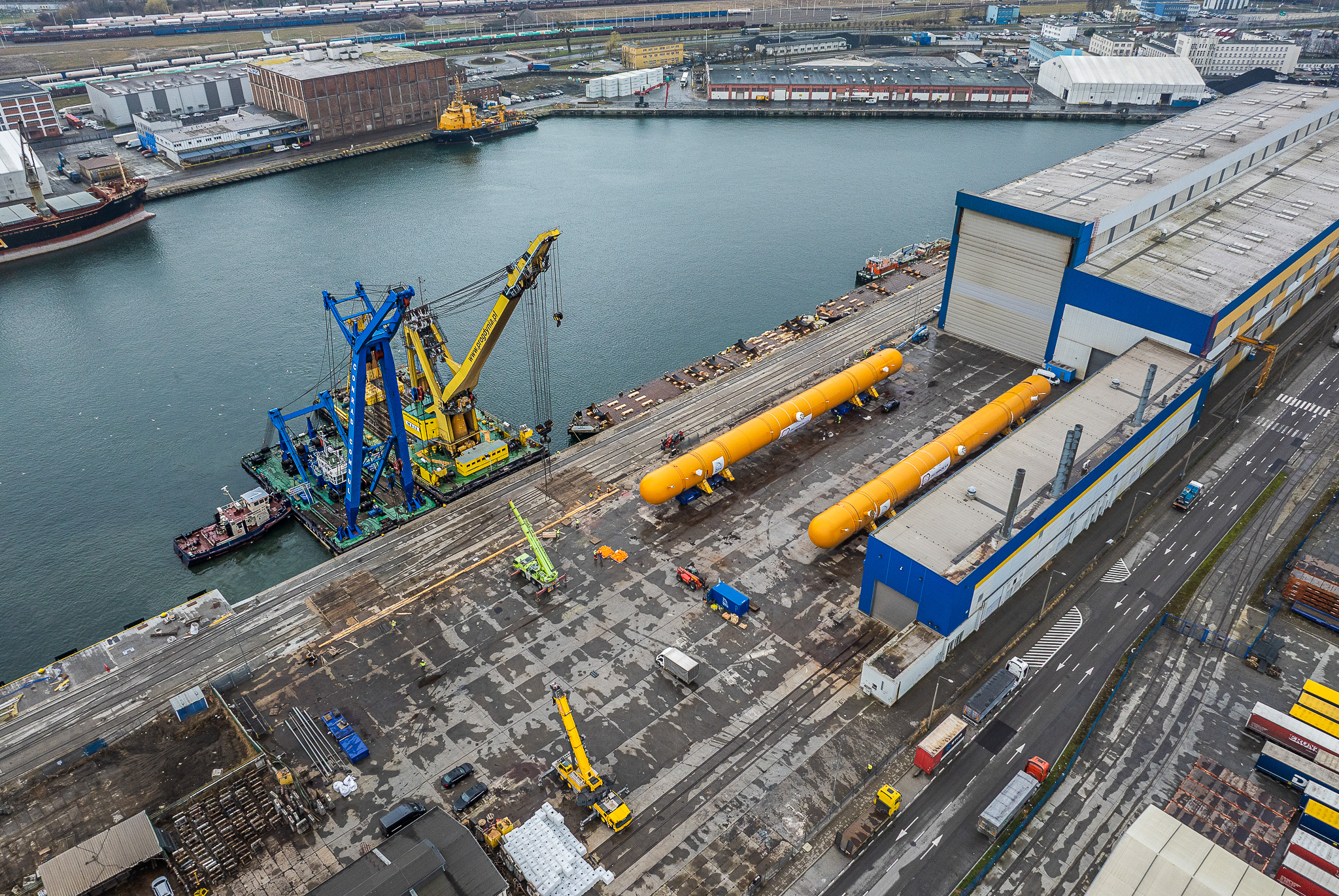
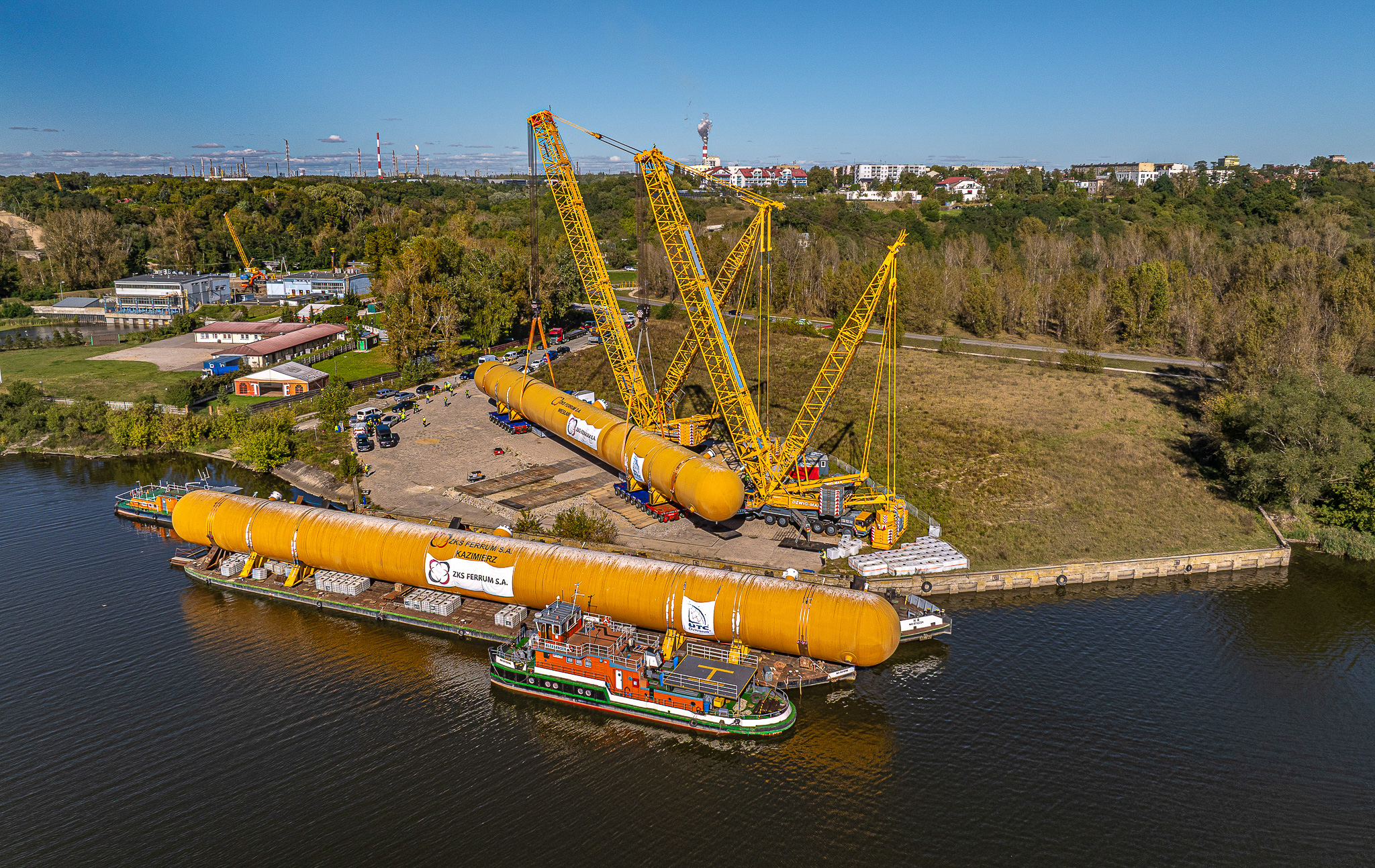
The propylene bullet tanks – each measuring 80 m x 9 m x 8.3 m and weighing 465 tons – were collected from the ZKS Ferrum fabrication facility in Gdynia. To prepare for transport, temporary supports and grillage were installed on the barges. The tanks were loaded using floating cranes and secured and fastened to supports and the deck structure as they were readied for transport to Płock.
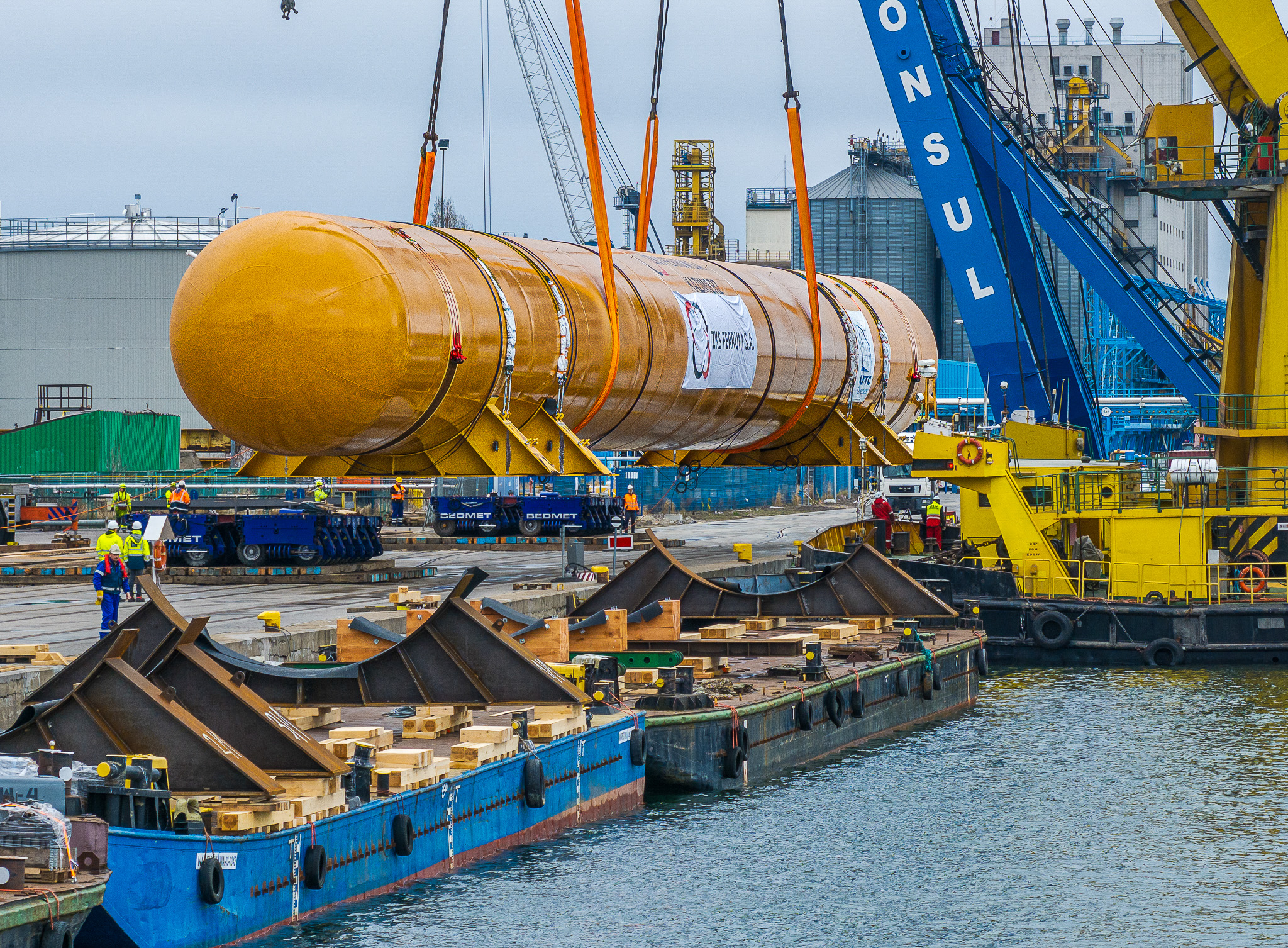
Under any circumstances, an operation of this scale requires meticulous planning, and this specific move was no exception. However, this project posed immediate and massive engineering challenges that tested the limits of inland water transport. Due to critical technological updates during the fabrication phase, the cargo was delayed and released later than UTC recommended. As a result, this pushed the project execution into a period where environmental and navigational conditions became severely compromised.
Unprecedented Navigational Constraints
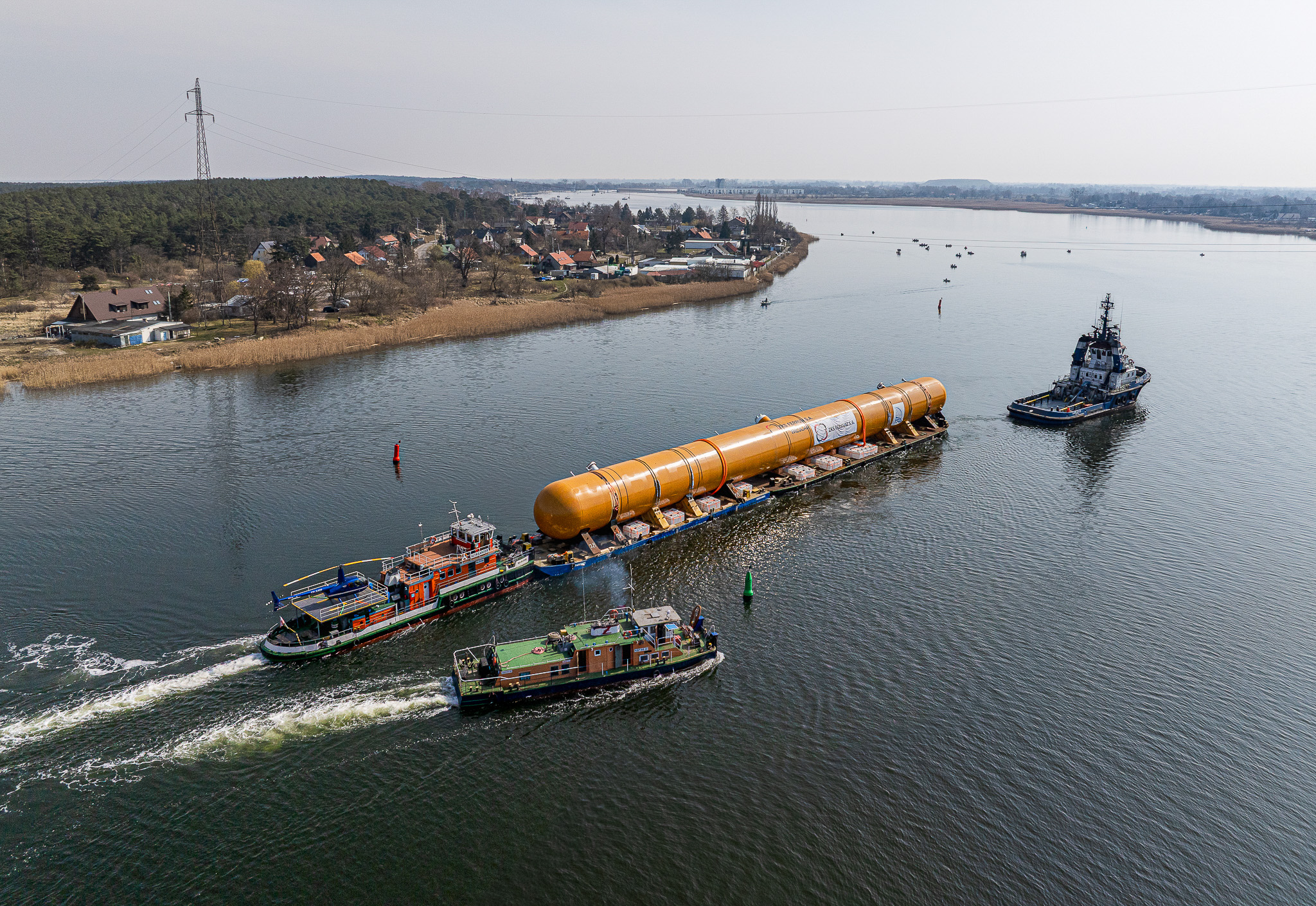
The mission faced its most critical phase as water levels on the Vistula began receding, reaching historic lows. That is when UTC’s team of experts showed their extreme engineering prowess. The reduced depth created unprecedented navigational constraints. The riverbed became a hazardous obstacle course with sandbars throughout that the barge had to navigate around. Operational speeds dropped from 11 km/h to 6 km/h. It became evident that the barges could simply not traverse the river without adapting and completely restructuring the transport plan.
Engineering Innovation
To reduce draft and enable passage, UTC engineers customized, designed, and installed an advanced buoyancy system. There were 50 buoyancy tanks installed on each side of two connected barges. Each tank generated approximately 1.1 tonnes of buoyancy force. This critical solution saved the project and made the difference between grounding and safe navigation.
Deflection shields were installed to protect against submerged obstacles, and custom wooden supports, engineered and manufactured in-house, evenly distributed tank weight to prevent listing. Two connected barges were used to distribute the load and improve stability.
Overcoming Structural Obstacles
The LPG tanks presented yet another critical issue. The upper chimney assembly made the tanks too tall to pass under certain bridges and overhead wires along the route. UTC’s expert team again engineered a solution. Tanks were rolled onto their sides while secured to the barges, repositioning the chimneys. Once bridges and overhead obstacles were cleared, the tanks were rotated and returned to their upright position. This solution avoided any structural modifications while protecting the integrity of the tanks.
Quick Operation Under Pressure
One of the most complex parts of the operation occurred when passing through the river locks. The additional buoyancy tanks made the barges too wide to clear the locks. Divers were employed to quickly dismantle the tanks before entering the locks. UTC’s team anticipated this occurrence and designed the system for quick disassembly while the load was still onboard. Precision scheduling and coordination were critical for this intricate maneuver. There were extreme space constraints, and timing was of the utmost importance to allow river traffic to proceed unimpeded.
Safe Arrival
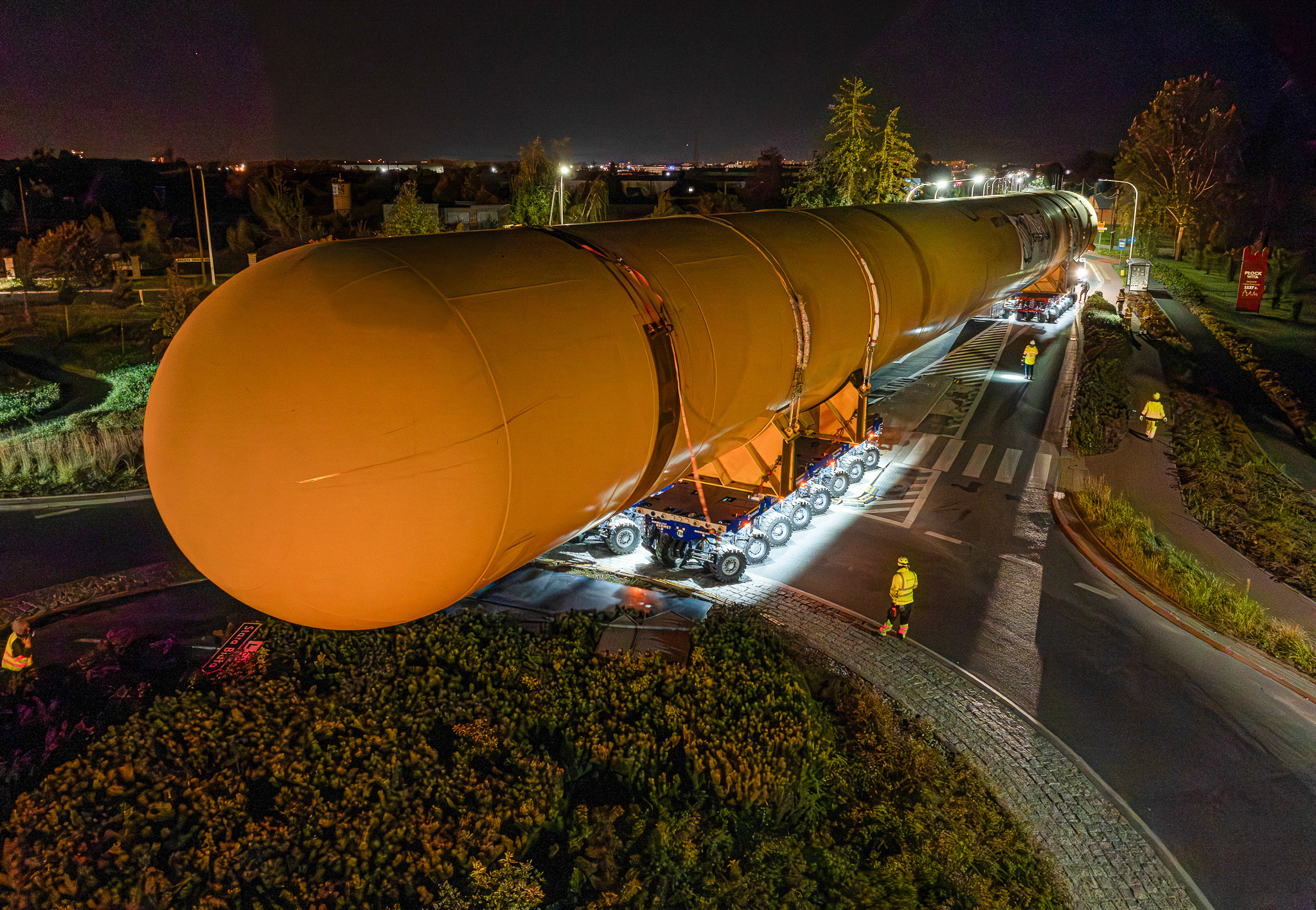
Once at the Płock quay, tanks were unloaded using a tandem lift with two cranes onto SPMT platforms. They were transferred to the Orlen refinery via Płockvia public roads. Laser scan modeling was employed to assess road conditions, identify obstacles, and validate clearances.
Once at the refinery, the transfer was completed using the internal road network. Tanks were rotated on rollers and positioned on sand banks at the designated installation site.
UTC’s Team In Action
The complexity of this project and the challenges faced were enormous, and UTC’s team of professionals rose to the occasion. Despite historic low water levels, space constraints at the locks, and navigational hazards, the project was completed safely and successfully. What was a formidable test of engineering expertise from day one evolved into a months-long demonstration of ingenuity and resilience in overcoming extreme conditions.
UTC’s Poland engineering team demonstrated not only deep technical expertise in handling oversized and heavy-lift cargo, but also the skill to adapt in real-time to rapidly changing conditions. Their ability to develop practical, innovative solutions under pressure ensured the integrity of the cargo in the most demanding environments.